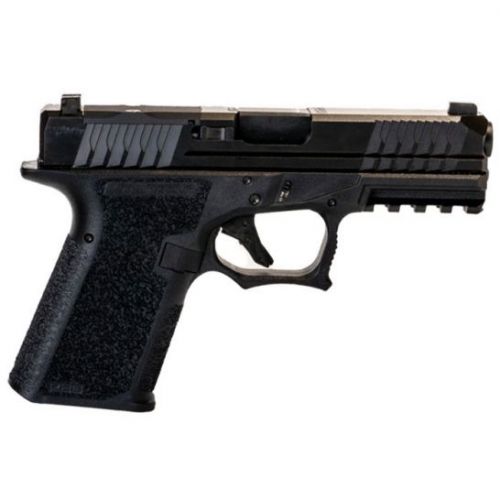
Polymer80 rail inserts, locking blocks and pins
Most of a Polymer80 pistol is Glock-pattern, but the frame hardware is where the design differs and where owners make ordering mistakes. The rails that the slide rides on are separate steel modules rather than molded-in inserts, the locking block is a Polymer80 part, and the pin set has its own sizes. This guide explains each piece, how to tell when it is worn, and how to buy the right replacement. These are parts and ship to your door. We are not affiliated with Polymer80 or Glock, and this is general maintenance information rather than a repair manual.
Why the frame hardware is different
A factory Glock frame has four short steel rails molded into the polymer at the factory. Polymer80 frames were designed so the rails could be installed as separate steel parts: a front rail module that is integral with the locking block assembly, and a rear rail module that seats in the trigger housing. That is why the frame parts kit for a PF-series frame contains parts a Glock kit does not, and why a Glock locking block will not drop into a Polymer80 frame.
The front rail module and locking block
The front module is a steel piece that combines the two front slide rails with the locking block, the surface the barrel's lug cams against when the slide cycles. It is held by the locking block pin and the trigger pin. It carries the impact of every shot, so it is the heaviest-duty part in the frame. Signs of a problem are rare but clear: visible peening on the block face, cracks at the pin holes or a slide that suddenly feels loose. Replacement is a matter of pushing two pins and lifting the module out; the new one must be listed for the PF-series and for your frame size, since the full-size and compact frames use the same module pattern but you should confirm before ordering.
The rear rail module
The rear module is a stamped steel piece with the two rear rails and a tab that seats into the trigger housing. It is pinned by the trigger housing pin. Because it is thinner than the front module, it is the part most often bent during a careless reassembly or an over-aggressive fitting job on a tight new frame. Slide drag at the rear of the stroke, uneven wear marks on the slide's rail cuts, or a slide that binds only when the trigger housing pin is fully seated all point to the rear module. Replacing it means removing the trigger housing; the trigger swap guide covers that disassembly.
The pin set
Three steel pins: the trigger pin, the locking block pin and the trigger housing pin. Polymer80 pins are sized for the PF-series frame and are not always identical to Glock Gen3 pins in length, so buy a PF-series pin set rather than assuming a Glock set will fit flush. Pins are pushed out left to right and in right to left with a 3/32-inch punch. A pin that walks out under fire means the slide-stop spring is not bearing on it correctly or the pin is undersized; do not shoot a pistol whose pins are proud of the frame.
Slide lock and spring
The slide lock is the spring-loaded bar you pull down to strip the slide. Polymer80 frames use a Glock-pattern slide lock and leaf spring. If the slide lock will not pull down, the spring is fouled or installed upside down; if the slide can be removed without pulling the lock, the lock is worn or the spring is broken. Both parts are cheap and worth keeping as spares.
Fitting a new slide to the rails
Aftermarket slides are cut to Glock Gen3 dimensions and Polymer80 rails sit at Glock spacing, but tolerances stack. A new slide that will not go on, or that binds, should not be forced. Check that the rail modules are fully seated and the pins flush, that no burr sits on the slide's rail cuts, and that the slide is the right size for the frame. Light polishing of the slide's rail cuts with fine abrasive is the usual remedy for a slightly tight fit; removing metal from the frame rails is not, because a rail module is a small part and a small mistake there makes the pistol unsafe.
Inspection schedule
- Every cleaning: look at the four rails for bright wear that goes from smooth to grooved; check that all three pins are flush.
- Every 1,000 rounds: strip the frame, inspect the locking block face and the rear module for bends or cracks, and check the slide lock spring.
- Any time the slide feels different: stop and look before the next range trip.
Frame care
The polymer frame itself is durable but not indestructible. Keep solvents that attack plastics away from it, do not leave the pistol in a hot car for weeks, and inspect the pin holes for elongation on a frame with many thousands of rounds through it. A frame with an elongated pin hole can sometimes be saved with oversized pins; more often it is the end of the frame's service life. Since the pistol's serial number is on the frame, a replacement frame is a new firearm and goes through a dealer.
Ordering the right parts
Search for parts listed as Polymer80 PF-series frame parts for the rail modules, locking block and pin set. Everything else in the frame, the trigger group, connector, springs, slide lock and slide stop, is Glock Gen3-pattern and covered in the small parts guide. Our compatibility guide has the full crossover list. Browse locking blocks and Polymer80 parts; all ship to your door, with the state exceptions noted in the shipping guide.
General information, not legal advice. Current as of September 2026. Laws change; check the official source before you act.